
The essence of Jazz music is the ethereal atmosphere of the dimensional harmony created by kaleidoscope of chromatic tones. It is the pulsating back beat of syncopating African rhythms through the rumble of the drums, or soft sound of the brush to the snare.
The music is an expression of melody from the depth of the soul conveyed as a gospel in many unique ways. These elements combined with the free impressionistic ambiance of instrumental tones in orchestration as a foundational juxtaposition of 7th, 9th,13th chordal harmony makes this style truly unique.
The essence of Jazz music is music that is upbeat, full of pizzazz ,yet laid back with style. One would never guess that this free style of music has a foundation that began with Baroque elements found in Classical music.
Classical music comes from the basic structure of homophony when two or more musical lines are played vertically in the same direction as sacred music. In fact, Jazz music is created with homophony in terms of the movement of chords to support the melodic improvisation.
However, when it comes to playing intervals and chordal harmonies, Jazz is free from the restriction of classical form. For example, if a song is written in the key of C or a minor there are no sharps or flats written on the staffs. Many times in Jazz music Accidentals are put in the music to cause a tonal effect found in chromatic tones. Tonal effects can occur when one or more notes are altered by raising or lowering a pitch by one half step. Sharps are symbols in the shape of a number sign or tic tac toe board (#). Flats are symbols in the shape of a lower case B(b), yet shaped differently like half a heart.
In some Jazz pieces, both the sharp and flat can occur simultaneously in a chord. The result of such musical experimentation can be Dissonant chords unresolved for the purpose of producing a certain sound. Depending on what tones are used the sound is either full of color, or full of tension.
On the other hand, Consonance is a stable balance of harmonic tones without tension. One example of the essence of Jazz Music is the song "Route 66" with cluster of chords with dissonant tones that move from major to minor to diminished to create tonal color.
The Tones in Jazz music is always about the speech rhythm and the chordal harmony full of color as influenced by music in the impressionism period. The essence of Jazz music serves as a personal interpretation of the picture the performer wants us to thinks about.
The icing to the cake are the vocalists and instrumentalists who performs how they feel from the soul as the music beckons them to reply to it's statement. As the soloist plays or sings, the beauty of strong kaleidoscope tones in the harmony encourages one to soar especially in ballads.
All of this can occur when the harmony plays in the right position above the correct bass tones found in all Jazz masterpieces. The true essence of Jazz music is present in its ability to shape the music through tones, the syncopation of speech rhythm, the chromatic harmony, improvisational solos, and constant motion of the bass. It is the free structure made from a balanced structure, and a music expressed from the soul.
Advertisements
Books about Jazz from Amazon
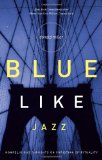 |
Blue Like Jazz: Nonreligious Thoughts on Christian Spirituality List Price: $14.99 Sale Price: $6.10 |
|
I never liked jazz music because jazz music doesn't resolve. . . . I used to not like God because God didn't resolve. But that was before any of this happened. In Donald Miller's early years, he was vaguely familiar with a distant God... |
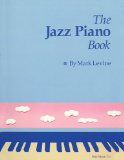 |
The Jazz Piano Book List Price: $32.00 Sale Price: $22.27 |
|
Endorsed by Kenny Barron, Jamey Aebersold, Richie Beirach, and more, this book presents all the information a student of jazz piano needs in an easy-to-understand, yet thorough, manner. For intermediate to advanced pianists, written by one of the acknowledged masters of jazz piano playing. |
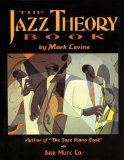 |
The Jazz Theory Book List Price: $42.00 Sale Price: $28.90 |
|
Endorsed by Jamey Aebersold, James Moody, Dave Liebman, and others, The Jazz Theory Book presents all the information any student of jazz needs in an easy-to-understand, yet thorough, manner. For intermediate to advanced players, and written by one of the acknowledged masters of jazz, it is used by universities around the world. |
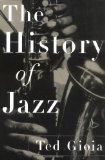 |
The History of Jazz List Price: $19.95 Sale Price: $11.24 |
|
Jazz is the most colorful and varied art form in the world and it was born in one of the most colorful and varied cities, New Orleans. From the seed first planted by slave dances held in Congo Square and nurtured by early ensembles led by Buddy Belden and Joe "King" Oliver, jazz began its long winding odyssey across America and around the world, giving flower to a thousand different forms--swing, bebop, cool jazz, jazz-rock fusion--and a thousand great musicians... |

Related posts:


