
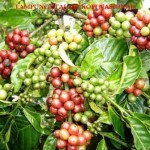
 Origin Indonesian coffee comes from several coffee plantation such as;
SUMATERA
The name “Sumatra” evokes the natural beauty and complexity of rain forest. This island is home to many rare animals, including orang utan, tigers, rhinos, pygmy elephants, sun bears and clouded leopards.
Coffee from this western-most island in Indonesia is also intriguing and complex, due to the large number of small-holder producers and the unique semi-wet processing technique they use. At the green bean stage, coffee from this area has a distinctive bluish color, which is attributed to processing method and lack of iron in the soil.
Coffees from Sumatra are known for smooth, sweet body that is balanced and intense. Depending on the region, or blend of regions, the flavors of the land and processing can be very pronounced. Notes of cocoa, tobacco, smoke, earth and cedar wood can show well in the cup.
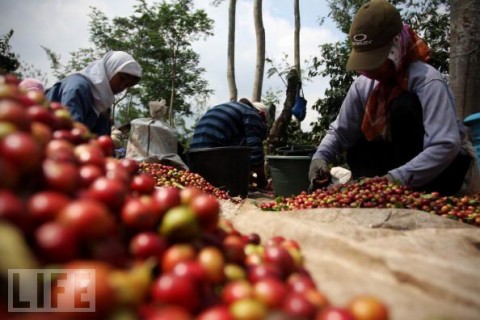
courtesy of life.com
Occasionally, Sumatran coffees can show greater acidity, which balances the body. This acidity takes on tropical fruit notes and sometimes an impression of grape fruit or lime.
Here are some coffees from Sumatra
- Lintong Coffee
Lintong coffee is grown in the District of Lintongnihuta, to the south-west of Lake Toba. This large lake is one of the deepest in the world, at 505 meters. The coffee production area is a high plateau, known for its diversity of tree fern species. This area produces 15,000 to 18,000 tons of Arabica per year. - Mandheling Coffee
Mandheling coffee is a trade name, used for Arabica coffee from northern Sumatra. It was derived from the name of the Mandailing people, who produce coffee in the Tapanuli region of western Sumatra. - Gayo Mountain Coffee
Gayo Mountain coffee is grown on the hillsides surrounding the town of Takegon and Lake Tawar, at the northern tip of Sumatra, in the region of Aceh. The altitude in the production area averages between 1,110 and 1,300 meters. The coffee is grown by small-holders, under shade trees.
Coffee from this region is generally processed at farm-level, using traditional semi-wet methods. Due to the wet processing, Gayo Mountain coffee is described as higher toned and lighter bodied than Lintong and Mandheling coffees from further east in Sumatra. - Mangkuraja Coffee
Mangkuraja coffee in Bengkulu Province, is the newest Arabica production area in Sumatra. This origin has a 150 hectare plantation, as well as small-scale producers. The altitude of the production area ranges from 1,100 to 1,300 meters. The coffee is sun dried on raised beds and wet hulled, using the "giling basah" technique.
JAWA
Java’s Arabica coffee production is centered on the Ijen Plateau, at the eastern end of  Java, at an altitude of more than 1,400 meters. The coffee is primarily grown on large estates that were built by the Dutch in the 18th century.
The five largest estates are Blawan (also spelled Belawan or Blauan), Jampit (or Djampit), Pancoer (or Pancur), Kayumas and Tugosari, and they cover more than 4,000 hectares.
These estates transport ripe cherries quickly to their mills after harvest. The pulp is then fermented and washed off, using the wet process, with rigorous quality control.
This results in coffee with good, heavy body and a sweet overall impression. They are sometimes rustic in their flavor profiles, but display a lasting finish. At their best, they are smooth and supple and sometimes have a subtle herbaceous note in the aftertaste.
This coffee is prized as one component in the traditional “Mocca Java” blend, which pairs coffee from Yemen and Java.
Some estates age a portion of their coffee for up to three years. As they age, the beans turn from green to light brown, and the flavor gains strength while losing acidity. These aged coffees are called Old Government, Old Brown or Old Java.
BALI
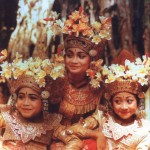 The name “Bali” evokes tropical breezes and beautiful beaches. This predominately Hindu Island is the first stop for many tourists coming to Indonesia.
They enjoy the stunning white and black sand beaches that characterize the coast of Bali. Inland, the volcanoes of Batukaru and Agung dominate the landscape. Between these peaks, the highland plateau of Kintamani is the main coffee growing area.
Many coffee farmers on Bali are members of a traditional farming system called Subak Abian, which is based on the Hindu philosophy of "Tri Hita Karana”. According to this philosophy, the three causes of happiness are good relations with God, other people and the environment. The Subak Abian system is ideally suited to the production of fair trade and organic coffee production.
Generally, Balinese coffee is carefully processed, using the wet method. This results in a sweet, soft coffee with good consistency. Typical flavors include lemon and other citrus notes.
To create a more distinctive flavor, some exporters from Kintamani area have begun to use “wet hulling”. In this process, the beans are washed and then partially dried with some of the mucilage intact, before milling. This process imparts rich, caramel flavors to the beans, reminiscent of coffee from Sumatra or Sulawesi.
SULAWESI
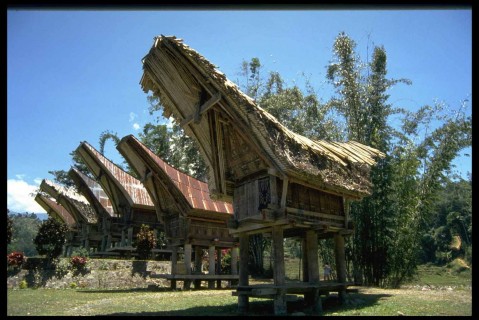
Toraja House, South Sulawesi
Toraja, Kalosi, Mamasa and Gowa
The Indonesian island of Sulawesi, formerly called the Celebes, lies to the north of Flores. The primary region for high altitude Arabica production is a mountainous area called Tana Toraja, at the central highlands of South Sulawesi.
To the south of Toraja is the region of Enrekang. The capital of this region is Kalosi, which is a well known brand of specialty coffee. The regions of Mamasa (to the west of Toraja) and Gowa (to the south of Kalosi), also produce Arabica, although they are less well known.
Unlike many of Indonesia’s islands, Sulawesi is geologically ancient, dating back more than 100 million years. This long history has resulted in soils with high iron content – thought to affect coffee flavor.
Sulawesi coffees are clean and sound in the cup. They generally display nutty or warm spice notes, like cinnamon or cardamom. Hints of black pepper are sometimes found. Their sweetness, as with most Indonesian coffees, is closely related to the body of the coffee. The aftertaste coats the palate on the finish and is smooth and soft.
Most of Sulawesi’s coffee is grown by small-holders, with about 5% coming from seven larger estates. The people of Tana Toraja build distinctively shaped houses and maintain ancient and complex rituals related to death and the afterlife. This respect for tradition is also found in way that small-holders process their coffee. Sulawesi farmers use a unique process called “wet hulling”.
Indonesian Coffee from Amazon
|
Coffee Bean Direct Indonesia Celebes Kalossi, Whole Bean Coffee, 5 Pound Bag List Price: $44.68 Sale Price: $34.37 |
|
|
This coffee originates from the excellent growing conditions of Indonesia. Celebes Kalossi has a full, heavy body and a rich, earthy flavor featuring subtle hints of berry with a tangy finish. Typical of Indonesian coffees, it has a very low acidity level. |
|
Coffee Bean Direct Green Indonesia Celebes Kalossi, Whole Bean Coffee, 5 Pound Bag List Price: $44.16 Sale Price: $33.97 |
|
|
This coffee originates from the excellent growing conditions of Indonesia. Celebes Kalossi has a full, heavy body and a rich, earthy flavor featuring subtle hints of berry with a tangy finish. Typical of Indonesian coffees, it has a very low acidity level that it will maintain all the way to the French level. |
 |
Bali's Best Coffee Candy |
|
42 individually wrapped candies from Indonesia. Hand picked Arabica coffee which use natural extracts grown in the Toraja Province of Northern Indonesian Isands. |
|
Kopi Luwak List Price: $89.95 Sale Price: $49.95 |
|
|
Medium roast kopi luwak, Whole Beans, Arabica beans, Net weight: 200gr |
|
Bali's Best Coffee Candy Case |
|
|
12 packs of 42 individually wrapped candies from Indonesia. Hand picked Arabica coffee which use natural extracts grown in the Toraja Province of Northern Indonesian Isands. |
Related posts:
